Introduction: understanding cash for clunkers today
If you’re searching cash for clunkers, you’re likely trying to figure out how to get value from an older vehicle that no longer feels worth keeping. Many people remember the original government program and wonder whether it still exists, while others simply want a fast, legitimate way to sell an aging or unwanted car without repairs.
Today, cash for clunkers means something very different from what it did in 2009. There is no active federal program, but the need it addressed still exists. Vehicle owners want clarity, fairness, and predictability when selling an older car. This guide explains how cash for clunkers really works today in the United States, what affects outcomes, and how to make a confident decision without surprises.
For a high-level overview of how modern vehicle selling works, you can start at the LightSpeedBid homepage, which outlines the general process from valuation to pickup.
Cash for clunkers originally referred to a 2009 federal incentive program that encouraged drivers to retire older vehicles. That program ended in 2009. Today, the phrase is commonly used to describe selling an older vehicle through private buyers, dealer incentives, or limited regional programs. Modern outcomes depend on vehicle condition, buyer type, towing logistics, paperwork readiness, and offer comparison.
What cash for clunkers really means in the United States
In the United States, cash for clunkers has two meanings:
- A historical federal program (Car Allowance Rebate System)
- A modern search phrase used by sellers looking for a simple way to sell an old car
The confusion comes from the fact that the original program was short-lived but highly visible. It created a lasting phrase that is still used in advertising and online searches.
The original cash for clunkers government program
The federal program launched in 2009 was designed to:
- Stimulate new vehicle sales
- Improve fuel efficiency
- Permanently remove older vehicles from the road
It required:
- Purchase of a new qualifying vehicle
- Strict eligibility rules
- Destruction of the traded-in vehicle
That program ended permanently in 2009 and does not exist today.
cash for clunkers vs modern vehicle selling options
| Selling Option | Typical Payout (USD) | Time to Complete | Towing Included | Paperwork Complexity | Best For |
| Private Cash Buyer | $650 – $850 | 1–3 days | Yes | Low–Medium | Balanced speed and value |
| Dealer Trade-In | $500 – $700 | 3–7 days | No | Medium | Buying another car |
| Scrap / Recycler | $300 – $500 | 2–4 days | Sometimes | Low | Very damaged vehicles |
| State / Local Program | $700 – $1,000* | 7–14 days | Varies | High | Emissions-based incentives |
When people search cash for clunkers today, they are usually not researching policy history. They are trying to solve a real-world problem:
“How do I sell my old car quickly and fairly without dealing with repairs or private buyers?”
That search typically leads to one of the following paths:
- Private cash-for-cars buyers
- Dealer trade-in incentives
- Regional or state retirement programs (limited availability)
Each option has different tradeoffs, risks, and outcomes.
the real factors that affect outcomes today
cash for clunkers and vehicle condition
Vehicle condition is the foundation of every modern cash-for-clunkers-style offer.
- Running vehicles are often easier to value and may command higher offers
- Non-running vehicles are common and still sellable
- Severely damaged vehicles introduce more risk and logistics cost
Age alone does not determine value. Many vehicles considered “clunkers” still contain valuable components.
cash for clunkers and scrap value vs parts value
Modern buyers typically value vehicles in one of two ways:
- Scrap value, based on vehicle weight and metal markets
- Parts value, based on recoverable components
Two buyers can look at the same vehicle and arrive at very different offers because one expects strong parts demand while another plans to recycle the car for metal only.
This is one of the main reasons cash for clunkers outcomes vary so widely.
cash for clunkers and towing logistics
Most vehicles sold under a cash-for-clunkers search require pickup. While many offers advertise towing as “free,” towing is always a real cost.
Factors that affect towing economics:
- Distance
- Urban vs rural access
- Whether the vehicle rolls and steers
- Tight garages or blocked access
When offers differ, part of the difference is often logistics rather than the vehicle itself.
cash for clunkers and title requirements
Paperwork remains one of the biggest friction points.
Most buyers require:
- Proof of ownership
- Valid identification
Missing documentation can:
- Slow the process
- Reduce offers
- Increase verification steps
If you’re unsure what documents are required, the FAQs page explains common paperwork scenarios and expectations.
scenarios that change outcomes
| Vehicle Scenario | How Buyers Value It | Pickup Difficulty | Offer Stability | Expected Outcome |
| Running but Old | Parts + resale + scrap | Low | High | Above-scrap pricing |
| Non-Running | Scrap + limited parts | Medium | Medium | Average offers |
| Severe Damage | Scrap weight only | Medium–High | Low | Lower payouts |
| Missing Title | Compliance-adjusted | Medium | Low | Delays or deductions |
| Needs Fast Removal | Conservative pricing | Low | High | Faster but lower offers |
cash for clunkers with a running but old car
A vehicle that still runs may be worth more than scrap. Some buyers value ease of movement, testing ability, or resale potential. Comparing offers helps identify whether your car is being priced beyond scrap value.
cash for clunkers with a non-running vehicle
Non-running vehicles are common. Pricing depends on towing complexity, access, and completeness. A car that rolls and steers is usually easier to handle than one that does not.
cash for clunkers without a title
Some buyers can proceed under specific state rules, while others cannot. Expect additional verification or reduced offers. State-level differences are often explained on the locations page.
cash for clunkers when speed matters
When sellers search cash for clunkers because they need fast removal, buyer capacity matters. Faster pickup often comes with more conservative pricing. Speed and value are usually linked.
cash for clunkers: common myths and mistakes
Myth: the cash for clunkers program still exists
It does not. Any offer today is private or regional.
Myth: cash for clunkers means instant cash
Payment timing depends on buyer process, inspection, and paperwork.
Myth: all clunkers are only worth scrap
Many older vehicles retain parts or resale value.
Mistake: accepting the first offer without context
One offer reflects one buyer’s constraints, not the market.
Mistake: incomplete condition disclosure
Missing details often lead to deductions at pickup.
How comparison improves cash for clunkers outcomes
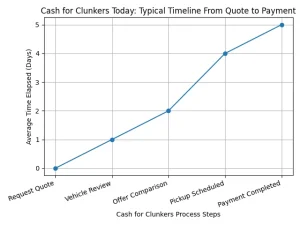
One of the biggest problems sellers face is lack of visibility. A single offer tells you nothing about the broader market.
Comparing offers allows you to:
- See pricing ranges
- Understand tradeoffs
- Balance speed vs value
- Reduce pickup-day surprises
Platforms designed around structured vehicle information help reduce guesswork by showing how different buyers value the same facts.
For sellers who want a secure digital process, offers are reviewed and accepted through:
👉 https://my.lightspeedbid.com/
cash for clunkers and buyer trust
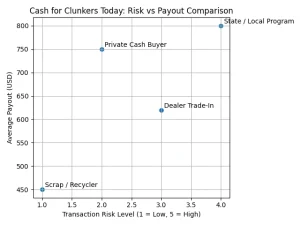
Trust matters in this space because transactions involve:
- Vehicle ownership transfer
- Physical pickup
- Final payment
Buyers who explain how offers are calculated and what affects price tend to produce more predictable outcomes. If you need clarification before proceeding, you can always reach out via the contact-us page.
Frequently asked questions about cash for clunkers
Is cash for clunkers still available in the US?
The federal program ended in 2009. The phrase is now used for private or regional options.
How does cash for clunkers work today?
It usually means selling an older vehicle to a private buyer who evaluates condition, logistics, and recoverable value.
Can I sell a non-running vehicle?
Yes. Most buyers accept non-running vehicles.
What documents are required?
Typically proof of ownership and identification.
Where can I learn more before selling?
Start with the homepage, then review faqs and locations for detailed guidance.
Final takeaway: cash for clunkers done right
Cash for clunkers is no longer a federal incentive, but the need it addressed still exists. Vehicle owners want a simple, fair, and predictable way to sell older cars without repairs or private listings. Today, outcomes depend on condition, logistics, paperwork, and buyer valuation models.
Understanding these variables — and comparing offers instead of relying on assumptions — transforms a confusing process into a controlled, low-risk transaction.