Why “People Who Buy Junk Cars” Is More Complex Than It Sounds
When most vehicle owners search for people who buy junk cars, they are not looking for industry theory. They are trying to answer a practical question: Who will actually take this car, and what will it realistically be worth? A junk car is not a single category. It can mean a non-running vehicle, an accident-damaged car, an older model with mechanical failure, or a car that is simply not worth repairing. Because of this, people who buy junk cars operate using very different business models, cost structures, and risk thresholds. This guide breaks down who these buyers are, how they make money, why offers vary, and what sellers should realistically expect before accepting an offer. The goal is not to sell hype, but to provide clarity so sellers can make informed decisions without pressure.Who Are the People Who Buy Junk Cars?
People who buy junk cars fall into several distinct categories. Each group evaluates vehicles differently, which is why two buyers can look at the same car and give dramatically different offers. At a high level, these buyers include:- Scrap metal processors
- Salvage yards and dismantlers
- Rebuilders and repair-focused buyers
- Export-focused buyers
- Market-based buyer aggregators
Types of People Who Buy Junk Cars and Their Business Models
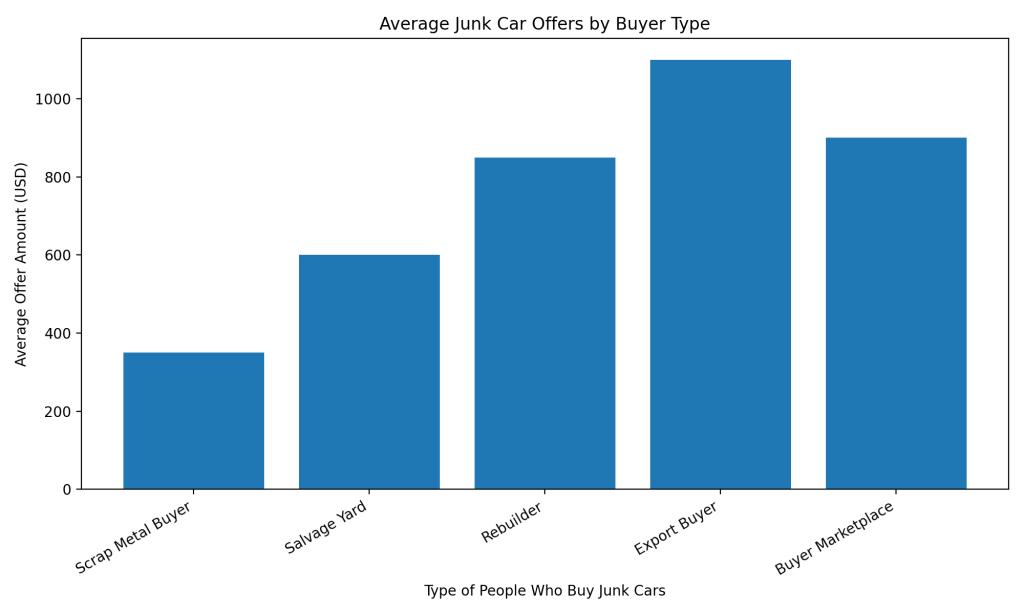
People Who Buy Junk Cars for Scrap Metal
Scrap-focused buyers care primarily about weight and metal composition. Their offers are tied closely to current scrap steel prices and transportation costs. They typically:- Accept cars in very poor condition
- Do not care about cosmetic damage
- Offer lower payouts but fast removal
People Who Buy Junk Cars for Parts and Dismantling
Salvage yards and dismantlers buy junk cars with the goal of reselling usable components. Engines, transmissions, catalytic converters, wheels, electronics, and body panels all factor into pricing. They often pay more when:- Major components are intact
- The car has not been stripped
- The model has strong parts demand
People Who Buy Junk Cars to Repair or Resell
Some buyers specialize in vehicles that appear beyond repair but are economically fixable. These buyers focus on:- Damage type (mechanical vs structural)
- Local resale demand
- Repair cost versus resale value
People Who Buy Junk Cars Through Buyer Marketplaces
Market-based platforms expose a vehicle to multiple buyer types simultaneously, allowing price discovery instead of a single valuation model. This approach reduces guesswork and explains why comparison-based systems often outperform one-off quotes. This is where platforms like https://my.lightspeedbid.com/ fit into the ecosystem, acting as a bridge between sellers and multiple buyer categories rather than a single buyer outcome.How People Who Buy Junk Cars Decide What Your Car Is Worth
Pricing is not arbitrary. People who buy junk cars calculate value using real operational factors.Core valuation inputs include:
- Vehicle weight and metal content
- Engine and transmission condition
- Completeness of major components
- Presence of catalytic converters
- Local and national scrap pricing
- Demand for parts or repair
- Title status and legal exposure
- Towing distance and logistics
Table — How Buyer Type Impacts Junk Car Value
| Buyer Type | Primary Value Driver | Typical Offer Range |
| Scrap Processor | Weight & metal price | Low |
| Salvage Yard | Reusable components | Medium |
| Rebuilder | Repair potential | Medium–High |
| Export Buyer | Overseas demand | High (select cars) |
Title, Paperwork, and Legal Risk Explained
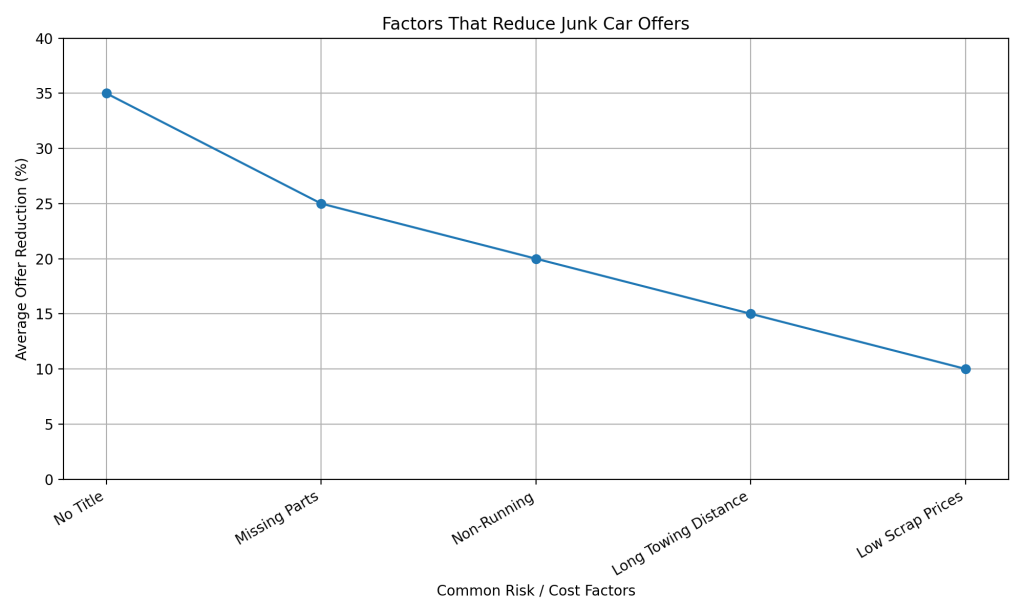
One of the biggest friction points when dealing with people who buy junk cars is documentation. Title requirements vary by state, and buyers price legal risk into their offers.Why Missing Titles Reduce Offers
A missing title increases:- Compliance costs
- Liability exposure
- Processing time
Table — How Title Status Affects Buyer Willingness
| Title Status | Buyer Acceptance | Price Impact |
| Clean Title | Widely accepted | Highest |
| Salvage Title | Commonly accepted | Moderate reduction |
| No Title | Limited acceptance | Significant reduction |
Towing, Pickup, and Logistics Reality
Most people who buy junk cars include towing in their offer, but towing is never free. The cost is embedded in pricing. Factors that affect logistics costs:- Distance from buyer yard
- Vehicle accessibility
- Whether the car rolls
- Urban vs rural pickup
Why Offers From People Who Buy Junk Cars Vary So Widely
Price differences are usually driven by:- Buyer specialization
- Risk tolerance
- Local market conditions
- Parts demand fluctuations
When Comparing People Who Buy Junk Cars Makes the Biggest Difference
Comparison matters most when:- The car is complete but non-running
- The model has strong parts demand
- Title status is unclear
- The seller is unsure of true value
Common Mistakes Sellers Make When Dealing With Junk Car Buyers
- Assuming all junk cars are worth the same
- Believing online estimates are guaranteed
- Ignoring paperwork requirements
- Accepting the first offer without context
Frequently Asked Questions About People Who Buy Junk Cars
Do all people who buy junk cars require a title?
No, but most prefer one. Acceptance varies by state and buyer risk tolerance.Why does my car get different prices from different buyers?
Because each buyer values weight, parts, repair potential, and risk differently.Is it better to sell to scrap or salvage?
It depends on vehicle completeness and parts demand.Are marketplace systems better than direct buyers?
They often provide clearer pricing by exposing multiple buyer models at once.Conclusion: What Sellers Should Take Away
People who buy junk cars are not all the same, and junk car value is not a fixed number. Pricing reflects real-world costs, risks, and demand. Sellers who understand buyer types, documentation requirements, and logistics make better decisions and avoid unnecessary losses. Before selling, it helps to understand:- Who is buying the car
- Why they value it the way they do
- What factors reduce or increase offers