If you are searching for junk car pick up, you are likely dealing with a vehicle that you want removed quickly, legally, and without unnecessary complications. The car may not run, may be damaged, or may have been sitting unused while taking up space and creating compliance or storage concerns. While many services advertise free or immediate junk car pick up, the actual experience varies widely depending on vehicle condition, paperwork, access, and the buyer’s operating model.
This guide explains how junk car pick up actually works in the United States. It covers the full process from evaluation to towing, explains what affects pickup speed and payment, highlights common misunderstandings, and shows how buyer comparison can reduce risk. The goal is clarity, not pressure — so you know exactly what to expect before scheduling a pickup.
Junk Car Pick Up: What It Really Means in Practice
Junk car pick up refers to the removal of an unwanted, non-functional, or end-of-life vehicle by a buyer who intends to recycle it, dismantle it for parts, or process it as scrap. In most cases, the vehicle is no longer suitable for private sale or trade-in.
When you schedule junk car pick up, the buyer is typically planning to do one or more of the following:
- Tow the vehicle to a scrap or recycling facility
- Remove reusable components for resale
- Aggregate vehicles for bulk processing
- Route the vehicle to a downstream buyer
Junk car pick up is not simply a towing service. It is part of a commercial transaction where the buyer evaluates cost, risk, and recoverable value before committing to removal.
Why People Look for Junk Car Pick Up
People search for junk car pick up for different reasons, but most situations fall into a few common categories:
- The vehicle no longer runs or starts
- Repair costs exceed the car’s realistic value
- The car has been damaged in an accident or flood
- The vehicle has been sitting unused for months or years
- Storage, HOA, or compliance issues require removal
Understanding why you need junk car pick up helps determine which buyer type is most appropriate and what outcome is realistic.
What Determines How Junk Car Pick Up Works
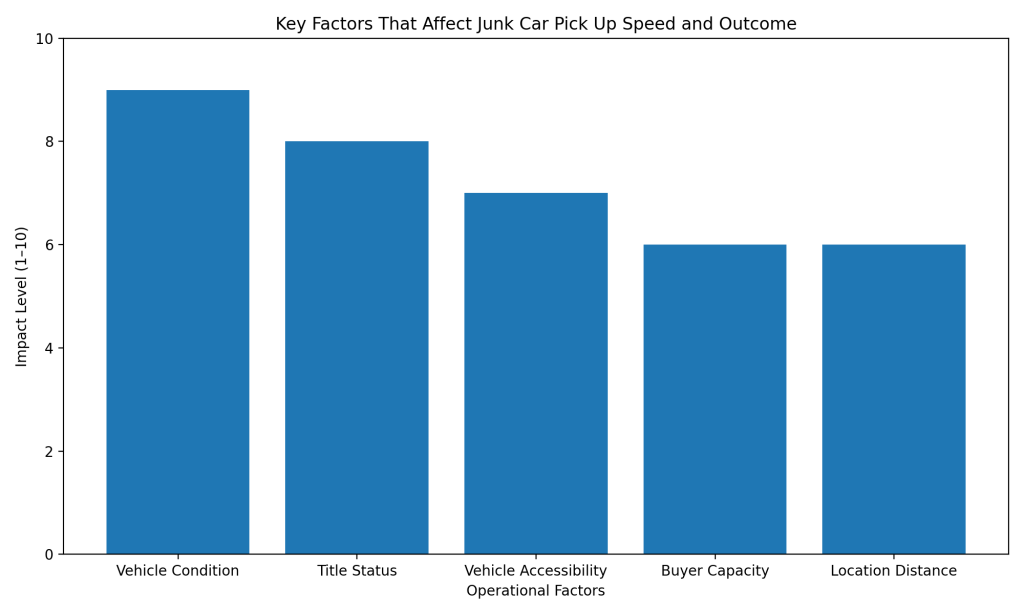
Several real-world factors determine how fast junk car pick up happens, whether the offer changes, and how smooth the transaction is.
Junk Car Pick Up and Vehicle Condition
Vehicle condition directly affects junk car pick up feasibility.
Buyers usually assess:
- Whether the vehicle runs
- Engine or transmission failure
- Accident, flood, or fire damage
- How long the vehicle has been sitting
- Whether it rolls and steers
A non-running vehicle is common and usually not a problem. However, vehicles that cannot roll or steer, or that are structurally compromised, often require special towing equipment, which can slow scheduling or reduce offers.
Junk Car Pick Up and Vehicle Completeness
Completeness refers to whether major components are present at pickup.
Key components include:
- Engine and transmission
- Catalytic converter
- Wheels and tires
- Battery
A complete vehicle can usually be picked up with standard equipment. An incomplete vehicle may require extra labor or equipment, affecting timing and price.
Junk Car Pick Up and Title Status
Ownership documentation often determines whether junk car pick up can proceed.
Common title situations include:
- Clear title in the owner’s name
- Salvage title
- Lost or misplaced title
- Title with an unresolved lien
Some buyers require documentation before dispatching a tow truck. Others may allow pickup but delay payment. Because requirements vary by state, many sellers review Homepage, FAQs, and Locations before scheduling pickup.
Junk Car Pick Up and Access Constraints
Access is one of the most overlooked factors affecting junk car pick up.
Access issues include:
- Vehicles parked in garages or backyards
- Narrow driveways or gated properties
- Steep terrain or soft ground
- Locked steering or blocked wheels
Poor access increases towing time and risk. If access details are not disclosed upfront, buyers may delay scheduling or adjust offers at pickup.
Junk Car Pick Up and Buyer Capacity
Even when a buyer is willing to pick up a vehicle, capacity matters. Tow trucks, drivers, and processing facilities operate on schedules. During high-demand periods, pickup timing can be delayed regardless of how fast an offer is provided.
How Timing Works With Junk Car Pick Up
Immediate Pick Ups
Some sellers need immediate pick ups due to compliance issues, relocation, or safety concerns. Immediate pickups prioritize speed over optimization. In these cases, sellers often accept a firm but lower offer in exchange for fast removal.
Scheduled Pick Ups
Scheduled pickups allow buyers to plan routes and allocate equipment efficiently. While not always faster, scheduled pick ups often results in clearer communication and fewer last-minute changes.
For Non-Running Vehicles
Non-running vehicles are common in junk car pick up. As long as the vehicle is complete and accessible, pickup is usually straightforward. Issues arise when non-running vehicles are also blocked, missing wheels, or partially dismantled.
For Heavily Damaged Vehicles
Severe accident or flood damage does not usually prevent pickup. However, vehicles with collapsed frames or missing axles may require flatbed towing, which can slow scheduling.
Common Misunderstandings
No Cost Impact
It usually means towing is included in the offer. It does not mean towing has no economic impact. Difficult access or long distances often reduce net payout.
Immediate Junk Car Pick Up Is Always Available
Immediate pickup depends on location, vehicle condition, and tow truck availability. Some companies advertise speed but still schedule pickups based on capacity.
All Junk Car Pick Up Services Pay the Same
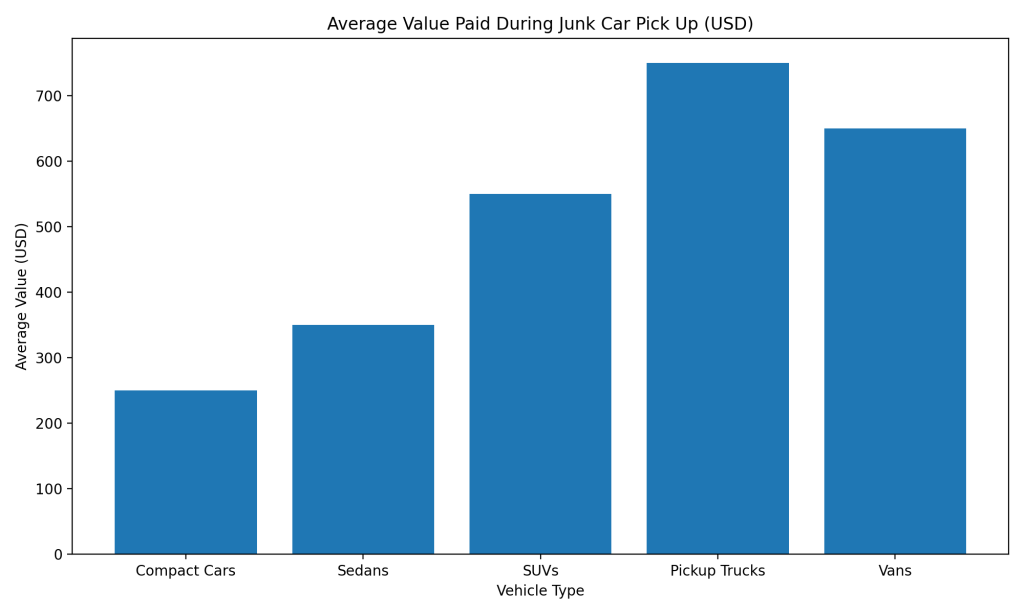
Different buyers value vehicles differently. A buyer focused on scrap weight may price differently than one focused on parts recovery or resale.
Payment Always Happens at Pickup
Some buyers pay at pickup. Others pay after paperwork verification. Sellers should confirm payment timing before scheduling.
How Buyer Comparison Improves the Outcomes
Many people arrange junk car pick up by contacting a single local service and accepting the first available option. While simple, this approach offers little transparency.
Different buyers approach it differently. Some prioritize speed. Others prioritize value recovery. Because of these differences, the same vehicle can receive very different pickup timelines and offers.
Buyer comparison reveals these differences. Instead of relying on one valuation model, sellers can see how multiple buyers assess the same vehicle based on downstream use, logistics, and demand.
LightSpeedBid illustrates this comparison-based approach within the online vehicle auction and bidding ecosystem. It shows how multiple buyers can evaluate the same junk vehicle differently depending on how they plan to process it. An informational view of this system is available at:
https://my.lightspeedbid.com/
Buyer comparison does not guarantee faster pickup, but it reduces guesswork and improves clarity.
Table 1: Types of Buyers Offering Junk Car Pick Up
| Buyer Type | Primary Focus | How Pick Up Is Handled | Typical Seller Risk |
| Local scrap yards | Scrap metal recycling | Scheduled towing based on proximity | Slower pickup during high demand |
| Auto recyclers | Parts recovery | Pickup coordinated with dismantling needs | More condition questions |
| Car removal services | Fast removal | Rapid scheduling with standard tow trucks | Conditional pricing |
| Vehicle resellers | Running or repairable cars | Pickup after inspection confirmation | Title and drivability required |
| Buyer comparison platforms | Multiple buyer demand | Pickup depends on winning buyer | Timing varies by buyer |
Table 2: Factors That Most Affect Junk Car Pick Up Speed and Outcome
| Factor | Why It Matters | How Sellers Reduce Risk |
| Vehicle condition | Determines towing method | Clearly disclose running and roll-steer status |
| Access constraints | Affects loading time | Share driveway, gate, or terrain details |
| Title status | Controls legal transfer | Confirm documentation requirements early |
| Vehicle completeness | Impacts processing plan | Disclose missing parts upfront |
| Buyer capacity | Affects scheduling speed | Compare multiple buyers |
| Location | Influences tow availability | Provide accurate pickup address |
Frequently Asked Questions
How fast can happen?
Pickup can happen same day in some cases, but many pickups are scheduled within one to three days depending on location and capacity.
Is car pick ups really free?
Towing is usually included, but its cost is reflected in pricing. Difficult pickups often reduce net payout.
Do I need a title?
Requirements vary by state and buyer. Some allow alternatives. Check faqs or contact-us for guidance.
Can I schedule junk car pick up if the car does not run?
Yes. Non-running vehicles are common. Accessibility and completeness matter more than running condition.
How does payment work with junk car pick up?
Payment timing depends on buyer policy. Some pay at pickup, others after paperwork verification.
Conclusion: Making the Right Junk Car Pick Up Decision
It is a practical solution for removing an unwanted vehicle, but outcomes vary based on condition, access, paperwork, and buyer capacity. Sellers who understand how the process works, disclose details accurately, and compare buyer options reduce delays and avoid surprises.
With clear expectations and proper preparation, it can be handled efficiently and legally. Buyer comparison adds transparency, helping sellers choose the pickup option that best matches their timeline and vehicle condition.