If you are trying to figure out how to junk your car, you are likely dealing with a vehicle that has reached the end of its useful life for you. The car may not run, repairs may cost more than the vehicle is worth, or it may have been sitting unused while insurance, registration, or storage concerns continue to build.
While junking a car sounds simple, many people encounter confusion once they start. Offers vary widely. Paperwork requirements are unclear. Some buyers promise easy solutions but introduce last-minute changes. These problems usually happen because sellers do not understand how the junk car process actually works.
This guide explains everything you need to know to junk your car in the United States. It covers how the process works, what affects value, legal and paperwork requirements, towing realities, common mistakes, and how buyer comparison can reduce risk. The goal is clarity and confidence — not pressure or sales language.
What It Actually Means in Practical Terms
To junk your car means to legally transfer ownership of a vehicle that is no longer practical to keep to a buyer who will recycle it, dismantle it for parts, or process it as scrap. In most cases, the vehicle is no longer reliable, safe, or economical to repair.
When you junk your car, the buyer generally plans to do one or more of the following:
- Recycle the vehicle for scrap metal
- Remove and resell usable components
- Process the car through a regional recycling facility
- Aggregate vehicles for high-volume processing
Junking a car is not abandonment and not informal disposal. It is a regulated transaction that usually requires proof of ownership and proper transfer documentation.
Why People Decide to Junk Their Car
People junk their car for different reasons, but most decisions fall into a few common categories:
- Repair costs exceed the vehicle’s value
- The vehicle no longer runs reliably
- The car has been damaged in an accident or flood
- The vehicle has been sitting unused for a long time
- Registration or inspection issues make continued ownership difficult
Understanding why you are junking your car helps determine which buyer type is most appropriate and what outcome you should realistically expect.
Key Factors That Determine the Outcome When You Junk Your Car
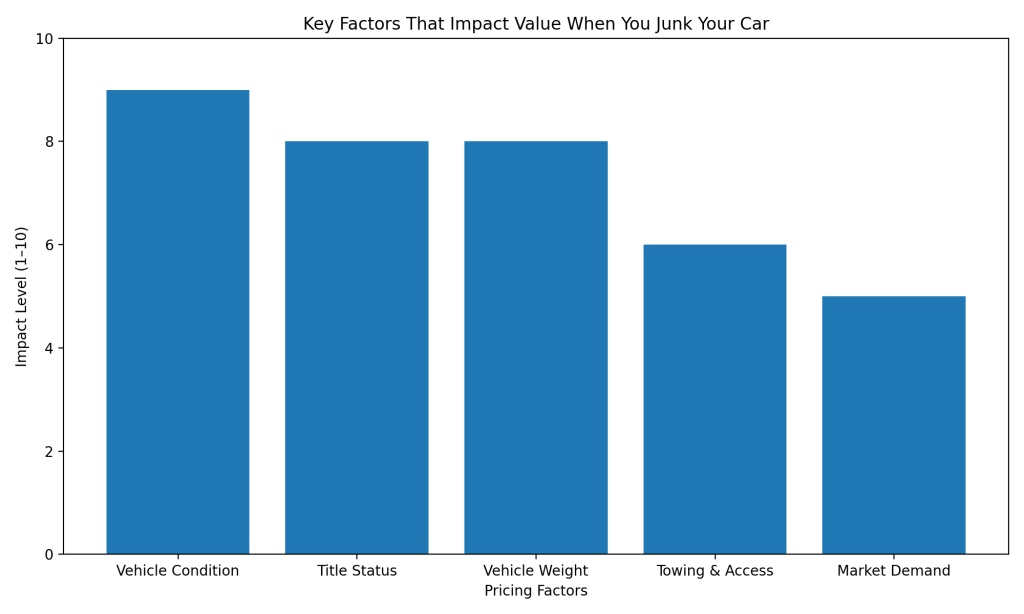
Every junk car transaction is shaped by a small number of real-world variables. These factors determine not only what you receive, but also how smooth the process is.
Junk Your Car and Vehicle Condition
Condition is the single biggest factor affecting outcomes when you junk your car.
Buyers usually focus on:
- Whether the vehicle runs or not
- Engine or transmission failure
- Accident, flood, or fire damage
- How long the vehicle has been sitting
- Whether major components are present
- Whether the vehicle rolls and steers
Cosmetic damage rarely matters. Missing major components almost always does. A non-running but complete vehicle often produces a better outcome than a running vehicle missing key parts.
Junk Your Car and Vehicle Completeness
Completeness refers to whether the car still has its major components.
Important components include:
- Engine and transmission
- Catalytic converter
- Wheels and tires
- Battery
- Major electronic modules
Removing parts before junking a car usually reduces value and increases risk. Even if the parts are removed legally, many buyers will adjust or reject offers if the vehicle is incomplete.
Junk Your Car and Title Status
Title status often determines whether the transaction can proceed at all.
Common situations include:
- Clear title in the seller’s name
- Salvage title
- Lost or misplaced title
- Title with an unresolved lien
- Title not in the seller’s name
Some buyers can work with alternative documents depending on state law. Others require a clear title. Requirements vary by location, which is why many sellers review Homepage, FAQs, and Locations before contacting buyers.
Junk Your Car and Towing Accessibility
Towing is a real operational cost, even when advertised as free.
Towing complexity increases when:
- The vehicle does not roll or steer
- The car is parked in a tight garage or backyard
- Wheels are missing or locked
- Access is restricted by gates or terrain
- The pickup is far from the buyer’s base
Poor access is one of the most common reasons for price changes at pickup.
Junk Your Car and Market Conditions
Scrap metal prices and parts demand fluctuate. These factors can influence offers, but they rarely override fundamentals like missing paperwork or difficult towing. Market conditions tend to affect marginal pricing, not eligibility.
Situational Scenarios That Change Results When You Junk Your Car
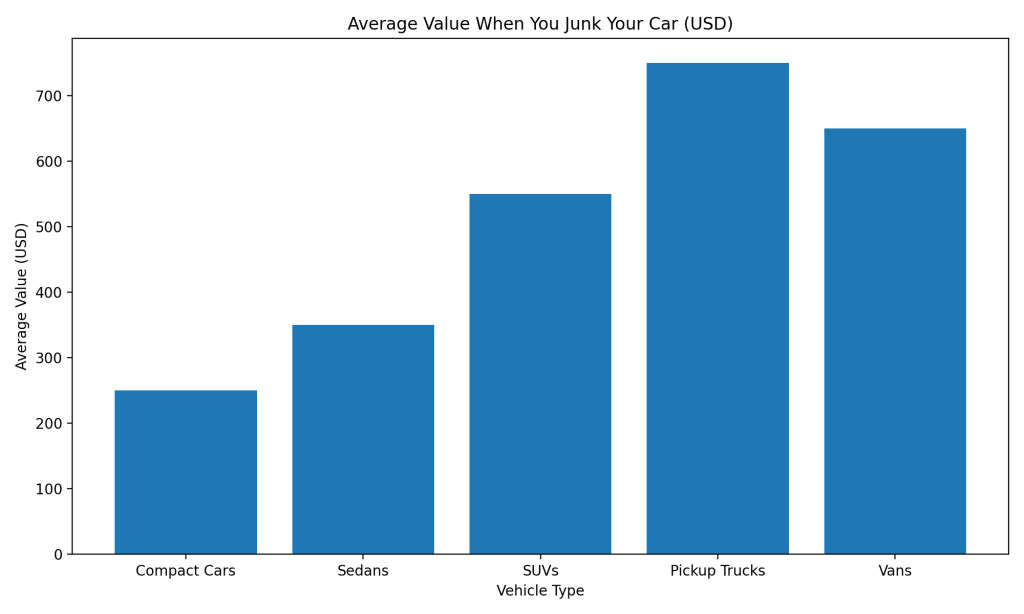
When It Does Not Run but Is Complete
A complete non-running vehicle is usually straightforward for recyclers and dismantlers. These vehicles are predictable to process and often receive stable offers.
When It Runs but Has Major Problems
Some owners junk cars that still run because reliability is poor or repairs are not worth the cost. In these cases, some buyers may value the vehicle more than scrap-focused buyers.
Without a Title
Junking a car without a title is sometimes possible, depending on state law and buyer policy. However, buyer options are usually reduced, and the process may take longer or require additional paperwork.
Difficult Pickup Access
Cars stuck in garages, narrow spaces, or hard-to-reach areas often receive lower offers unless access details are disclosed upfront.
Under Time Pressure
When speed matters, sellers often accept a lower but firm outcome. This trade-off can be reasonable when storage, compliance, or safety issues exist.
Common Mistakes People Make When They Junk Their Car
Believing All Junk Cars Are Valued the Same
There is no universal value for junk cars. Outcomes vary based on condition, completeness, and buyer model.
Assuming Free Towing Means No Cost Impact
Towing costs are real and are usually reflected in pricing.
Removing Parts Before Junking the Car
Removing valuable parts almost always reduces overall value and increases the chance of renegotiation.
Ignoring Documentation Requirements
Paperwork issues are a leading cause of delayed or failed transactions.
Comparing Offers That Are Not Comparable
One offer may be firm and net. Another may be conditional. Always compare final outcomes, not advertised numbers.
How Buyer Comparison Helps When You Junk Your Car
Many people junk their car by contacting a single local buyer and accepting the first offer. This can work, but it provides little context for whether the outcome is reasonable.
Different buyers value the same vehicle differently because they plan to use it differently. A scrap-focused buyer prices by weight. A dismantler values parts demand. A reseller cares about drivability and paperwork.
Buyer comparison exposes these differences. Instead of relying on one valuation model, sellers can see how multiple buyers assess the same vehicle. This reduces guesswork and improves confidence.
LightSpeedBid is an example of a comparison-based platform within the online vehicle auction and bidding ecosystem. It demonstrates how multiple buyers can evaluate the same junk vehicle based on downstream use, logistics, and demand. An informational view of this approach is available at:
https://my.lightspeedbid.com/
Buyer comparison does not guarantee a higher outcome, but it improves transparency and reduces risk.
Table 1: Buyer Types Involved
| Factor | Why It Matters | How Sellers Reduce Risk |
|---|---|---|
| Title status | Determines whether legal transfer can occur | Confirm documentation requirements early |
| Condition accuracy | Prevents disputes and price changes | Clearly describe mechanical and damage issues |
| Towing access | Affects buyer’s operational cost | Share roll-and-steer and access details upfront |
| Missing components | Reduces recoverable parts and scrap value | Disclose removed catalytic converter, wheels, or battery |
| Buyer model | Changes how the vehicle is valued | Compare offers across different buyer types |
| Timing and demand | Influences marginal pricing | Compare offers within a short time window |
Table 2: Factors That Change Outcomes
| Buyer Type | Primary Focus | What Drives Value | Typical Seller Risk |
|---|---|---|---|
| Local scrap yards | Scrap metal recycling | Vehicle weight and metal prices | Lower value if vehicle is incomplete |
| Auto recyclers | Parts recovery and recycling | Parts demand and component condition | More inspection and verification questions |
| Car removal services | Fast vehicle removal | Logistics efficiency and routing | Conditional pricing or last-minute adjustments |
| Vehicle resellers | Running or repairable vehicles | Resale potential and drivability | Clear title and acceptable condition required |
| Buyer comparison platforms | Multiple buyer demand | Competitive buyer pricing | Timing depends on buyer participation |
Frequently Asked Questions
Is it worth it to junk your car instead of repairing it?
It depends on repair cost, reliability, and vehicle value. When repairs exceed realistic resale value, junking the car is often the practical choice.
What paperwork is required to junk your car?
Most buyers require proof of ownership and photo ID. Requirements vary by state. Review faqs or ask through contact-us for clarification.
Does it cost money to junk your car?
Usually no, but towing difficulty or paperwork issues can reduce what you receive.
Can I junk my car if it does not start?
Yes. Non-running vehicles are commonly junked.
Are online quotes reliable when junking a car?
Online quotes are estimates. Final outcomes depend on condition accuracy, paperwork, and towing access.
Conclusion: Making the Right Decision
To junk your car is to make a practical decision shaped by cost, condition, and convenience. Outcomes vary because buyers value vehicles differently based on how they plan to process them. Sellers who understand the process, prepare documentation, and compare options reduce risk and avoid surprises.
With clear information and realistic expectations, junking a car can be handled legally, efficiently, and with confidence.