If you are searching for sell my broken car, you are likely dealing with a vehicle that no longer runs properly, is unsafe to drive, or would cost more to repair than it is worth. Many sellers assume a broken car has little value, but that is not always the case. Outcomes vary widely depending on how the vehicle is classified, how buyers evaluate risk, and how prepared the seller is before requesting offers.
This article explains how the broken car market works in the United States and what actually determines pricing, speed, and reliability when selling a non-functional vehicle. It breaks down buyer types, common mistakes, and situational differences so you can make informed decisions without relying on guesswork or misleading assumptions.
What “Sell My Broken Car” Means in Real Market Terms
When people say they want to sell a broken car, they usually mean one of several scenarios. The car may not start at all, it may run but be unsafe, or it may have suffered mechanical or accident damage that makes repair impractical. Buyers do not use the word broken in the same way sellers do. Instead, they categorize vehicles based on usability, completeness, and downstream value.
A broken car can still fall into multiple valuation paths. Some buyers see it as a parts vehicle. Others see it as a scrap asset. In certain cases, a broken car is still a candidate for repair or resale within specialized channels. The category your car falls into directly affects how it is priced and how quickly it can be sold.
Understanding this distinction is critical because sellers who assume their car is scrap-only often accept lower offers than necessary, while sellers who assume repair value exists may waste time pursuing buyers who are not a fit.
Key Factors That Influence the Outcome When You Sell My Broken Car
Vehicle completeness and why it matters when you sell my broken car
Completeness is one of the strongest predictors of value for a broken car. A vehicle that does not run but still has its engine, transmission, catalytic converter, wheels, and interior components intact is far more attractive to buyers than one that has been stripped.
Buyers rely on predictable processing. When major components are missing, processing costs increase and resale options narrow. That risk is reflected directly in the offer. Even small omissions, such as missing wheels or a removed catalytic converter, can reduce value more than sellers expect.
Mechanical versus structural damage
Not all broken cars are equal. Mechanical failures such as transmission issues, engine problems, or electrical faults often leave parts value intact. Structural damage, particularly frame damage, reduces repair feasibility but does not eliminate parts or scrap value.
Accident damage is evaluated differently depending on severity. Cosmetic damage has limited impact on parts recovery. Structural or flood damage changes compliance and resale rules, which narrows the buyer pool.
Operability and movement capability
Whether the car can roll, steer, and be loaded easily matters. Buyers factor towing complexity into their offers. A car that cannot roll or requires special equipment increases labor time and transportation cost, which often results in deductions.
If you plan to sell my broken car quickly, providing accurate information about operability prevents delays and renegotiation at pickup.
Title status and ownership clarity
Ownership documentation is often the deciding factor between a fast sale and a stalled one. In many states, buyers cannot legally purchase or dismantle a vehicle without clear proof of ownership. Missing titles, unresolved liens, or incorrect signatures create risk for buyers.
Resolving paperwork issues before requesting offers almost always improves speed and stability of the transaction.
Local demand and buyer density
Location influences both price and timing. Areas with many dismantlers, recyclers, and licensed buyers create competition. In lower density regions, buyers may factor travel distance and limited resale channels into their pricing.
Local demand for specific vehicle models also plays a role. Some vehicles have strong parts turnover in certain regions, which increases buyer interest even if the car is broken.
Situational Scenarios That Change Results When You Sell My Broken Car
Sell my broken car that still starts or drives short distances
A broken car that still starts or moves has more potential pathways than sellers often realize. Buyers may treat it as wholesale inventory rather than scrap. This can result in higher offers than weight-based pricing.
In these cases, speed comes from choosing buyers who can evaluate remotely and commit without repeated inspections.
Sell my broken car that does not run at all
Non-running vehicles are common in the market. Buyers evaluate them based on completeness, parts demand, and ease of pickup. A complete non-running car often performs better than an incomplete one, even if the incomplete vehicle is newer.
Accuracy in describing condition is essential. Understating issues can cause delays. Overstating damage can reduce offers unnecessarily.
Sell my broken car after an accident
Accident damage changes how buyers evaluate risk. Airbag deployment, frame damage, and structural integrity affect repair feasibility but not necessarily parts value. Some buyers specialize in salvage rebuilds. Others focus on dismantling.
Your outcome depends on matching the car to the right buyer type rather than assuming all accident damage leads to scrap pricing.
Sell my broken car with a missing title
Title requirements vary by state. Some buyers can process exceptions. Others cannot. Missing titles often delay transactions unless addressed early.
Sellers commonly consult /faqs or state-specific guidance in /locations to understand what applies in their area before proceeding.
Sell my broken car with an active lien
An active lien does not automatically prevent a sale, but it adds steps. Buyers need assurance that ownership can be transferred cleanly. Some buyers coordinate payoff directly. Others require the seller to resolve the lien first.
Transparency about lien status prevents wasted time and failed pickups.
Common Misunderstandings and Mistakes When Selling a Broken Car
Assuming broken means worthless
Many broken cars retain significant parts value. Engines, transmissions, electronics, and interior components often drive pricing more than the car’s ability to run.
Accepting the first offer without comparison
Different buyers evaluate the same broken car differently. One buyer may value parts demand. Another may focus on scrap. Treating the first quote as the market often results in lower payouts.
Failing to disclose missing or damaged components
Undisclosed issues almost always lead to deductions at pickup. Honest disclosure protects your quoted price and speeds up the transaction.
Confusing scrap, junk, and salvage categories
These terms are often used interchangeably online, but buyers apply them differently. Clear descriptions matter more than labels.
Ignoring net payout and focusing on headline numbers
A higher quote does not guarantee a better outcome if fees, towing costs, or paperwork delays reduce what you actually receive.
How Buyer Comparison Fits Into the Process When You Sell My Broken Car
Most sellers start with a single local buyer because it feels simpler. The downside is that single-buyer models hide how differently buyers value the same vehicle. One buyer may see strong parts demand. Another may see only scrap value. Another may route vehicles into auction or wholesale channels.
Buyer comparison reveals these differences. Instead of guessing whether an offer is fair, sellers can see how pricing changes across buyer types and service models. This reduces uncertainty and improves decision-making, especially for broken vehicles where classification matters.
LightSpeedBid operates within this comparison-based ecosystem by allowing sellers to understand how multiple buyers evaluate the same vehicle. The goal is not persuasion but transparency. Seeing different valuation approaches helps sellers choose based on speed, certainty, or payout priorities. An overview of this comparison logic can be seen at https://my.lightspeedbid.com/.
Practical Steps to Sell My Broken Car Without Delays or Deductions
Prepare accurate information before requesting offers
Gather the following details:
VIN and mileage
Title status
Condition and operability
Missing components
Pickup location and accessibility
Clear photos
Accurate information reduces inspection disputes and renegotiation.
Confirm towing and pickup expectations
Ask about distance limits, special equipment, and timing windows. Written confirmation protects your time.
Complete post-sale requirements
After pickup, submit any required release of liability and retain records. For general process guidance, sellers often start at the Homepage or reach out via Contact Us.
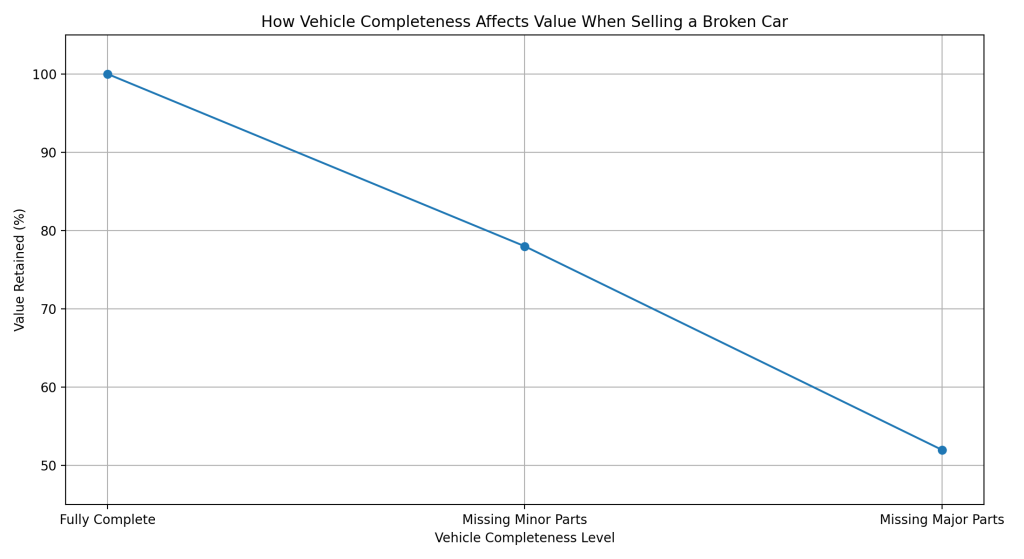
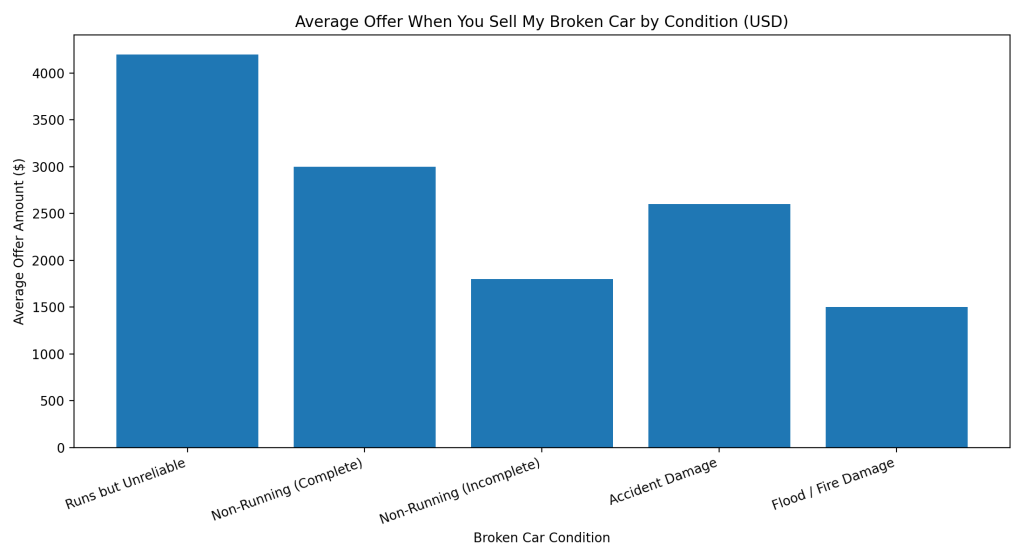
Table 1: Typical Outcomes When You Sell My Broken Car by Condition
| Vehicle Condition | Common Buyer Type | Relative Payout | Key Considerations |
| Runs but unreliable | Wholesale or salvage buyer | Medium to high | May avoid scrap pricing |
| Non-running but complete | Parts or dismantler | Medium | Completeness matters most |
| Non-running incomplete | Scrap or limited buyers | Low to medium | Missing parts reduce value |
| Accident damaged | Salvage or dismantler | Medium | Damage type matters |
| Flood or fire damage | Limited licensed buyers | Low | Compliance narrows options |
Table 2: Paperwork Readiness Checklist for Broken Cars
| Situation | What Is Usually Required | Common Delay | Risk Reduction |
| Clean title | Title and ID | Incorrect signatures | Verify buyer instructions |
| Missing title | DMV replacement | Processing time | Start early |
| Active lien | Payoff details | Lender delays | Coordinate payoff |
| Inherited vehicle | Executor documents | Authority issues | Gather proof |
| Stored vehicle | Release forms | Yard restrictions | Confirm access |
Frequently Asked Questions About Selling a Broken Car
Can I sell my broken car without fixing it
Yes. Repairs rarely increase net payout enough to justify time and cost when selling a broken vehicle.
Do broken cars always go to scrap
No. Many broken cars are valued for parts or resale channels rather than metal alone.
Is free towing guaranteed
Free towing is common but often conditional. Distance and accessibility matter.
What documents do I need to sell my broken car
Most states require a title and valid identification. Additional steps may apply.
Does mileage matter if the car is broken
Mileage matters less than completeness and parts condition, but it can still influence buyer interest.
Conclusion
Selling a broken vehicle is not just about finding someone willing to take it. Outcomes depend on how the car is classified, how buyers evaluate risk, and how prepared the seller is. Broken does not automatically mean worthless, and assuming it does often leads to lower payouts or delays.
When sellers understand how buyers think and compare different valuation paths, they reduce uncertainty and make better decisions. Whether your priority is speed, certainty, or maximizing value, informed comparison and accurate preparation put you in control of the process.