If you are searching for sell my old car, you are likely facing a decision that feels bigger than it should. Older vehicles sit at an awkward intersection of value and inconvenience. They may still run, they may not. They may feel “too good to scrap” but not valuable enough to justify repairs. Many owners struggle not because they lack options, but because they don’t understand how the market actually values older cars.
Selling an aging vehicle is not about finding a buyer. It is about choosing the right selling path for your specific situation. The wrong path leads to wasted time, reduced offers, or deals that fall apart late in the process. The right path delivers a clean exit, fair value, and minimal stress.
This guide explains how the U.S. vehicle resale ecosystem treats older cars, how different buyers think, and how to avoid the most common mistakes sellers make.
Understanding What “Sell My Old Car” Really Means
When someone searches “sell my old car,” they are rarely asking the same question as another seller using the same phrase.
An “old car” can be:
A high-mileage commuter that still runs reliably
A vehicle with mechanical issues but intact components
A non-running car that still has parts demand
A vintage or specialty model with collector interest
A near end-of-life vehicle better suited for recycling
Because these situations are so different, there is no single best buyer for all older vehicles. The right outcome comes from aligning the car’s actual condition with a buyer whose business model fits that condition.
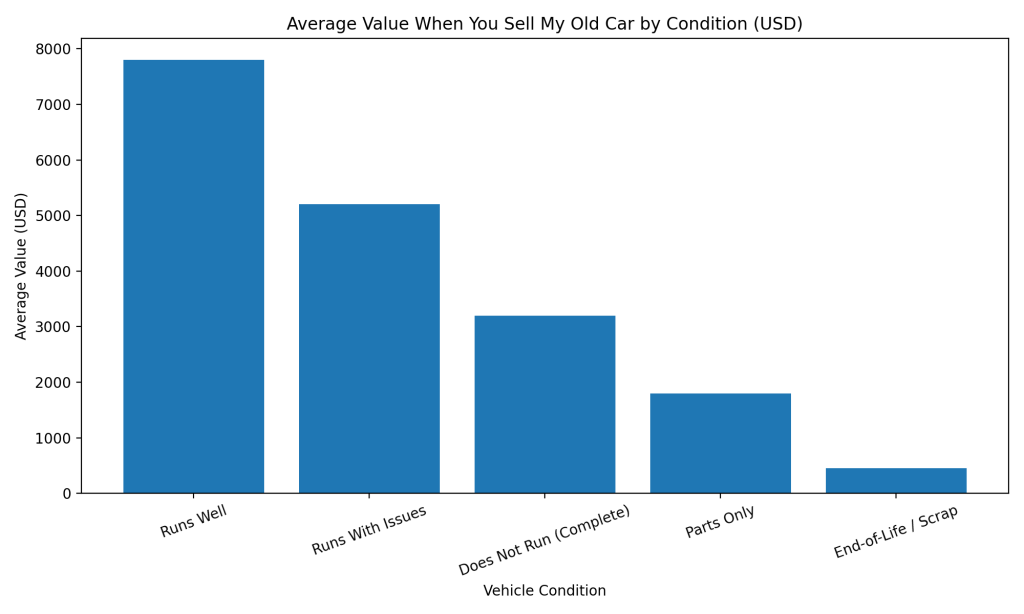
How Condition Shapes Outcomes When Selling an Older Vehicle
Mechanical Reality Matters More Than Age
Age alone rarely determines value. Buyers care far more about functionality than calendar years.
Key evaluation points include:
Does the vehicle start, run, and drive?
Are there engine or transmission issues?
Are dashboard warning lights active?
Has the car been in a major accident or flood?
Is the vehicle complete (engine, transmission, catalytic converter present)?
A 15-year-old car that runs smoothly can outperform a newer car with serious mechanical faults. Understanding where your vehicle truly sits on this spectrum is critical.
Selling an Old Car That Doesn’t Run
One of the most common seller misconceptions is assuming a non-running car has no value. In reality, non-running vehicles often sell successfully — just not to retail buyers.
What changes when a car doesn’t run:
Private buyer demand drops sharply
Towing becomes a pricing factor
Parts completeness becomes more important
Buyer type matters more than negotiation skill
Vehicles that roll, steer, and are complete tend to retain more value than sellers expect, even if they don’t start.
Title and Paperwork: The Hidden Gatekeeper
Clear Title = Maximum Flexibility
A clear title in the seller’s name unlocks the widest range of options, including private sales, dealers, and online buyers.
Documentation Issues Narrow the Field
Common complications include:
Lost titles
Salvage or rebuilt branding
Outstanding liens
Title not in seller’s name
Each issue reduces the number of buyers who can legally complete the transaction. Resolving paperwork early almost always improves outcomes. Many sellers review Homepage, /faqs, and /locations to understand baseline requirements before committing to a selling path.
Market Demand and Buyer Incentives
Why Buyers Price the Same Old Car Differently
Different buyers make money in different ways:
Retail resellers need drivability and clean presentation
Repair buyers look for fixable problems with margin
Dismantlers focus on parts turnover and efficiency
Scrap buyers focus on weight and recoverable materials
Because of this, offers can vary widely — even when every buyer is acting in good faith.
Local vs Broader Demand
Some older vehicles have weak local interest but stronger regional or national demand. Limiting exposure too early can suppress value.
Speed vs Value: Choosing What Matters More
When Speed Is the Priority
Fast sales usually involve:
Fewer steps
Lower risk of deal failure
Predictable timelines
But speed almost always trades off against price.
When Maximizing Value Makes Sense
Higher returns often require:
More time
Buyer communication
Inspections or viewings
Negotiation tolerance
There is no wrong priority — only mismatched expectations.
Evaluating the Main Ways to Sell an Older Car
Private Sale to sell my old car
Best suited for:
Running vehicles
Clean titles
Sellers with time and patience
Pros:
Potentially higher payout
Cons:Time investment
Buyer reliability issues
Safety and payment concerns
Dealer Trade-In of sell my old car
Best suited for:
Convenience
Bundled vehicle purchases
Pros:
Simple
Fast
Cons:Typically lowest offers
Online Buyers of sell my old car
Best suited for:
Structured processes
Sellers who want speed with less effort
Pros:
Quick estimates
Clear steps
Cons:Final price adjustments after inspection
Wholesale & Removal Buyers of sell my old car
Best suited for:
Non-running vehicles
Older cars with mechanical issues
Pros:
Towing included
Predictable completion
Cons:Lower ceiling for good-condition cars
Selling an Old Car Whole vs Parts
When Selling the Whole Vehicle Makes Sense to sell old car
Repairs are minor or optional
The car is complete
Title is clear
When Parts-Focused Routes Make More Sense to sell old car
Repairs exceed resale value
Model has strong parts demand
Buyer specializes in dismantling
Attempting to part out a vehicle yourself often backfires unless the seller has time, space, and experience.
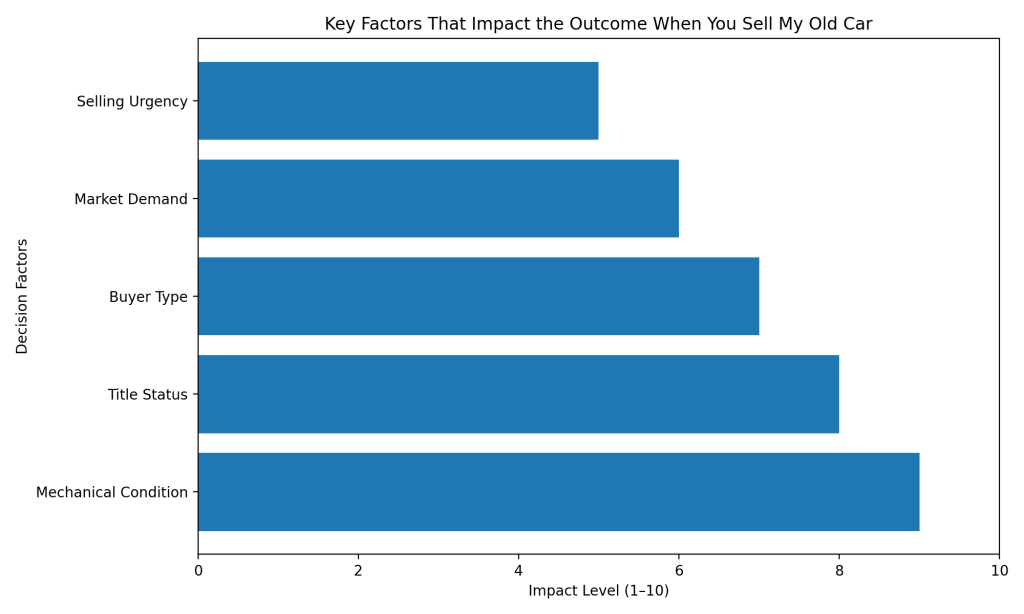
Why Buyer Comparison Improves Outcomes of Sell my old car
Most sellers get one quote and assume it represents the market. It rarely does.
Comparison works because it:
Reveals how different buyer models value the same car
Reduces dependence on a single valuation lens
Surfaces buyers whose incentives align with your vehicle
LightSpeedBid operates within this comparison-driven ecosystem, allowing multiple buyers to evaluate vehicles based on downstream use, logistics, and demand. This approach improves transparency and decision quality for sellers navigating older vehicle sales.
https://my.lightspeedbid.com/
Table 1: Matching Vehicle Condition to the Right Selling Path
| Vehicle Situation | Best-Fit Option | Why It Works | Trade-Off |
|---|---|---|---|
| Runs well, clean title | Private or structured online | Retail demand | Time |
| Runs with issues | Repair/wholesale buyers | Repairs priced realistically | Lower ceiling |
| Non-running but complete | Removal or dismantlers | Parts & towing logic | Not retail value |
| Near end-of-life | Recycling routes | Predictability | Lowest payout |
| Vintage/specialty | Broad exposure | Right buyer reach | Longer timeline |
Table 2: Whole Vehicle vs Parts Decision Framework
| Factor | Whole Vehicle | Parts Route | Seller Risk |
|---|---|---|---|
| Repair economics | Favorable | Unfavorable | Overestimating part value |
| Time available | Limited | Flexible | Long holding periods |
| Buyer access | Retail | Dismantlers | Partial teardown traps |
| Legal handling | Simple | Complex | Disposal compliance |
Frequently Asked Questions About Sell My Old Car
Is it possible to sell an old car that doesn’t run?
Yes. Value depends on completeness, accessibility, and buyer type.
What paperwork is usually required?
Typically a title and ID. State rules vary — many sellers consult FAQs and Locations.
Is selling for parts always better?
No. Many complete non-running cars sell better as a whole to dismantlers.
Are there buyers for very old vehicles?
Yes, but pricing reflects processing cost and demand.
Final Thoughts: Sell my old car
Selling an older car is less about negotiation and more about alignment. When sellers understand how buyers think, disclose condition accurately, and choose a channel that fits their vehicle’s reality, outcomes improve dramatically. Avoiding rushed decisions and comparing buyer models turns uncertainty into clarity.