Getting top dollar for junk cars is often misunderstood. Many sellers believe it’s about calling as many buyers as possible and choosing the highest quote. In practice, that approach frequently leads to price drops, canceled pickups, or payouts that fall short of expectations.
High-value junk car sales follow a different logic. The final amount a seller receives is shaped by how the vehicle is classified, how risk is managed before pickup, and whether the buyer’s business model aligns with the vehicle’s true condition. Sellers who understand this process consistently outperform those who chase headline numbers.
This guide explains how top dollar for junk cars is actually determined, why pricing varies so widely, and what sellers can do to protect the final payout—not just the initial quote.
Internal link: Homepage
What “Top Dollar for Junk Cars” Actually Means
The phrase top dollar does not mean the largest number mentioned during a phone call or online form. It means the highest amount a buyer can confidently pay without needing to renegotiate later.
Every serious buyer evaluates a vehicle using three fundamental questions:
- What value can realistically be extracted from this vehicle?
Scrap metal, reusable parts, resale, or a combination. - How much operational effort is required?
Towing, labor, storage, compliance, paperwork, and processing time. - What risks could reduce profitability?
Title problems, missing parts, misrepresented condition, or access issues.
The strongest offers appear when value is clear, friction is low, and uncertainty is minimized. Sellers who understand this dynamic are far more likely to receive the highest cash paid for junk cars.
Where Junk Car Value Is Commonly Lost (Before Pickup)
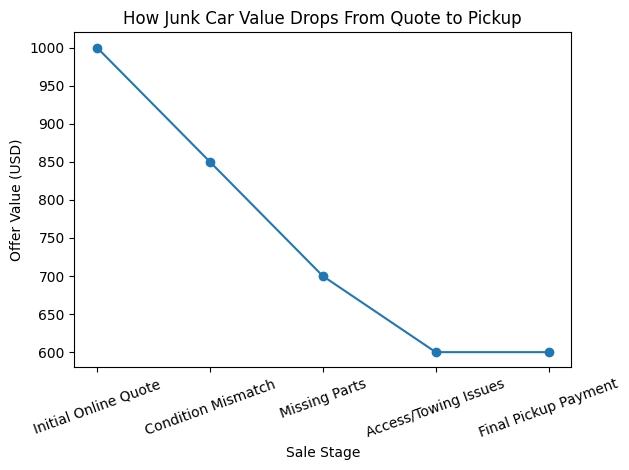
Most price reductions do not happen because buyers are dishonest. They happen because assumptions break down.
Common assumption failures include:
- The car was assumed to roll but doesn’t
- A catalytic converter was expected but removed
- Access is tighter than described
- The title situation is more complex than stated
- Damage affects systems differently than expected
When assumptions collapse, buyers adjust pricing to protect themselves. This is why sellers who want top dollar for junk cars focus on accuracy rather than optimism.
| Quote Assumption | What the Buyer Expects | What Happens at Pickup | Impact on Final Price |
| Vehicle rolls freely | Easy winch or flatbed loading | Wheels locked or suspension damaged | Moderate to high deduction |
| Catalytic converter present | Parts resale value included | Converter missing | Immediate price reduction |
| Easy driveway access | Standard tow equipment | Tight garage or blocked access | Lower offer or reschedule |
| Clear title available | Fast processing | Title missing or lien unresolved | Buyer reassesses or declines |
| Accurate damage description | Known repair or part removal | Additional hidden damage found | Price renegotiation |
The Vehicle Factors That Truly Influence High Offers
Vehicle identity matters more than age
Year, make, model, trim, engine type, drivetrain, and production variant are far more important than mileage or age alone.
Two vehicles from the same year can fall into entirely different pricing categories depending on configuration. Certain engines, transmissions, or catalytic converters command strong demand regardless of cosmetic condition.
Damage location often matters more than severity
Sellers often assume heavier damage equals lower value. In reality, where damage occurs is usually more important than how bad it looks.
- Front-end damage can eliminate engines, cooling systems, and electronics
- Rear or side damage may leave high-demand components intact
- Cosmetic damage often has minimal impact on parts value
For sellers trying to achieve the max value for damaged cars, accurate damage description is critical.
Completeness is a major pricing signal
Missing components reduce offers quickly—not just because of replacement cost, but because they increase uncertainty.
Common value-reducing omissions include:
- Catalytic converters
- Wheels or tires
- Batteries
- Major drivetrain components
When buyers are confident the vehicle is complete, they price more aggressively.
Title and ownership clarity
Title issues don’t automatically destroy value, but they absolutely affect pricing and buyer eligibility.
Some buyers can handle:
- Lien releases
- Bonded titles
- State-specific alternatives
Others cannot legally process the vehicle without a clean title. Disclosing ownership status early is essential to securing a top dollar quote for your junk car that holds.
Location, Access, and Towing: The Silent Price Killers
Towing is not free for buyers. Vehicles that require extra labor, special equipment, or difficult access often receive lower offers.
Factors that influence price include:
- Non-rollable vehicles
- Tight garages or gated access
- Rural or remote pickup locations
- Steep terrain or obstacles
Clear access details reduce friction and protect pricing.
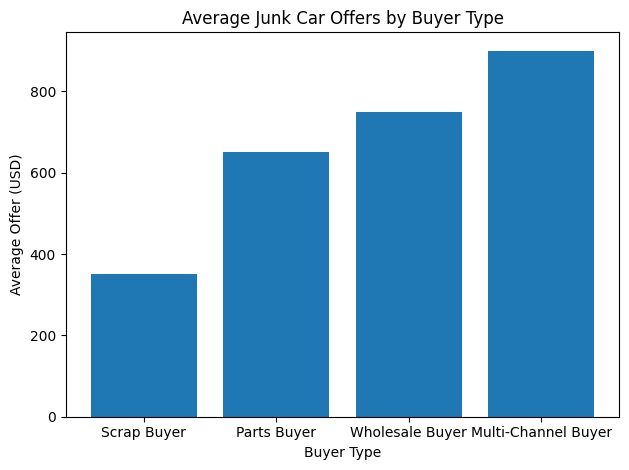
Why Buyer Type Determines Price More Than Condition
One of the biggest misunderstandings in the junk car market is assuming all buyers value vehicles the same way.
They don’t.
Different buyers optimize for different outcomes:
- Scrap-focused buyers prioritize weight and metal pricing
- Parts buyers prioritize component demand and removal efficiency
- Wholesale buyers prioritize resale speed and margin
A vehicle considered “scrap” by one buyer may be high-value inventory for another.
This is why searching for companies that pay most for junk cars often produces conflicting advice. The best payer changes based on the vehicle’s best downstream use.
| Buyer Type | Primary Valuation Focus | When This Buyer Pays More | When This Buyer Pays Less |
| Scrap-Focused Buyers | Vehicle weight and metal prices | Heavy vehicles with intact frames and minimal towing distance | Light vehicles or cars with high-value reusable parts |
| Parts Buyers (Dismantlers) | Demand for reusable components | Vehicles with intact engines, transmissions, catalytic converters | Vehicles missing key components or with severe front-end damage |
| Wholesale / Resale Buyers | Speed of resale and market demand | Running or near-running vehicles with clean titles | Vehicles with title issues or structural damage |
| Multi-Channel Buyers | Combination of scrap, parts, and resale | Vehicles with flexible processing options | Vehicles that require specialized handling |
Why top dollar for junk cars Buyers Comparison Changes the Outcome
Using a single buyer forces your vehicle into a single valuation model.
Buyer comparison reveals:
- How the vehicle is being classified
- Whether value is coming from parts, scrap, or resale
- Whether assumptions are conservative or optimistic
Comparison does more than increase competition—it exposes valuation logic.
Platforms like LightSpeedBid are built around this principle, allowing vehicles to be evaluated by buyers with different processing paths rather than relying on a single interpretation. You can explore this approach at https://my.lightspeedbid.com/.
Real-World Pickup-Day Scenarios That Affect Final Payout: Top dollar for junk cars
The pickup moment is where pricing becomes real.
Scenario: The price changes at pickup
This usually means new information appeared—missing parts, access issues, or paperwork discrepancies.
Scenario: The buyer pressures for a quick handoff
Once the vehicle is loaded, seller leverage disappears. High-value sellers always confirm final payment terms before keys change hands.
Scenario: Paperwork doesn’t match the quote
If deductions appear that were not disclosed earlier, sellers should pause the transaction.
Pickup day discipline is one of the strongest predictors of whether a seller receives top dollar for junk cars.
Behavioral Differences Between High-Value and Low-Value Sellers for top dollar for junk cars
Sellers who achieve high payouts tend to:
- Ask what assumptions the quote is based on
- Confirm what reduces the price
- Provide clear, accurate details
- Compare valuation paths, not just numbers
Sellers who receive lower payouts often:
- Accept the first quote
- Rush pickup scheduling
- Assume all buyers operate the same way
- Focus only on speed
Common Misconceptions That Cost Sellers Money for top dollar for junk cars
- “All quotes are firm”
- “Condition doesn’t matter if it’s junk”
- “Running status determines everything”
- “Title issues always kill value”
- “The highest quote wins”
Each of these assumptions leads to avoidable losses.
Frequently Asked Questions About Top Dollar for Junk Cars
How do I get top dollar for junk cars without delays?
Provide accurate information upfront, confirm access and paperwork, and compare buyers who value your vehicle differently.
Which companies pay the most for junk cars?
There is no universal answer. The best-paying buyer depends on whether your vehicle is best suited for scrap, parts, or resale.
Can non-running vehicles still get strong offers?
Yes. Completeness, demand, and towing ease often matter more than whether the car starts.
Can I still get top dollar for junk cars with title issues?
Sometimes. It depends on state laws and buyer capabilities. Transparency is essential.
What most often causes price drops?
Missing parts, incorrect condition descriptions, access issues, and unclear paperwork.
Internal link: FAQs
How to Protect a High-Value Outcome for top dollar for junk cars
Before accepting any offer:
- Confirm the assumptions behind the price
- Ask what specifically would reduce the offer
- Verify towing and access requirements
- Compare buyer valuation approaches
Internal link: Locations
Internal link: Contact Us
Final Takeaway
Getting top dollar for junk cars is not about luck or persuasion. It is about clarity, alignment, and risk reduction.
When sellers understand how buyers think, disclose accurately, and compare valuation paths, they consistently receive higher final payouts—with fewer surprises.
This is how high-value junk car sales actually work.