If you are researching junk yards that buy cars, you are likely trying to solve a practical problem: what to do with a vehicle that no longer runs reliably, has suffered major damage, or has reached the point where repairs no longer make financial sense. These vehicles are not worthless, but their value is no longer determined by retail resale logic. Instead, they enter a different market entirely — the vehicle recycling and dismantling ecosystem. This guide explains how that ecosystem works in the United States. It covers how value is calculated, how local facilities operate, what sellers commonly misunderstand, and how to avoid mistakes that lead to delays or reduced payouts. The focus is not on persuasion, but on operational clarity so sellers can make informed, low-risk decisions.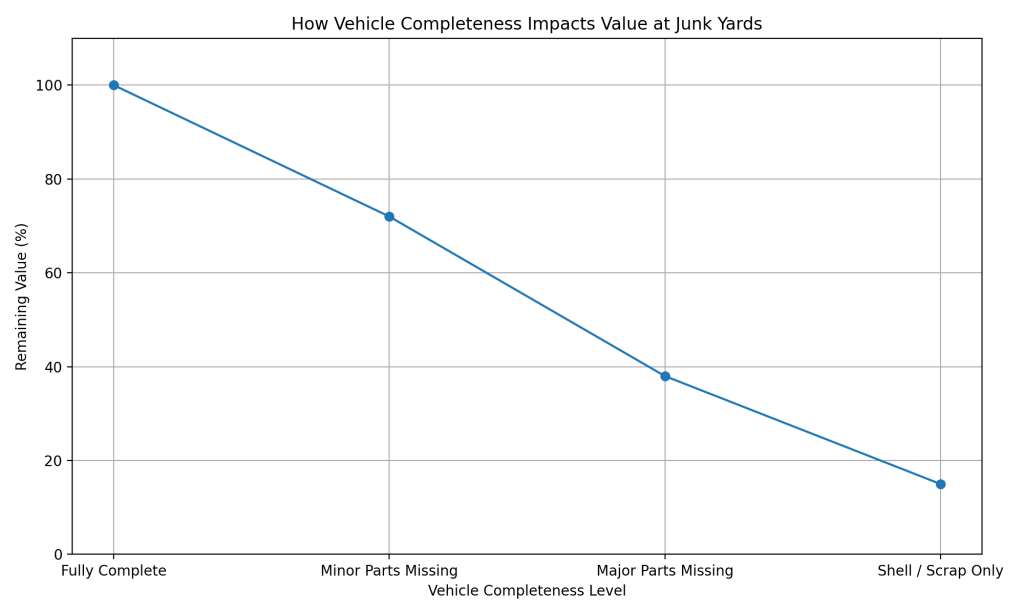
What Junk Yards That Buy Cars Really Are
The phrase junk yards that buy cars is often used broadly, but it actually refers to several different types of automotive recycling operations. At a high level, these facilities acquire vehicles for:- Component recovery
- Material recycling
- Aggregation and redistribution
- Scrap-focused recycling yards
- Automotive dismantlers
- Hybrid salvage operations
How Junk Yards That Buy Cars Calculate Vehicle Value
Component Recovery vs Scrap Weight
Value is derived from two main sources:- Reusable components (engines, transmissions, catalytic converters)
- Raw material weight (steel, aluminum, copper)
The Role of Local Processing Costs
Every yard has fixed operational costs:- Labor
- Equipment
- Environmental compliance
- Transport logistics
Towing Distance and Accessibility
Distance matters because towing is a real expense, even when advertised as “free.” The cost is simply absorbed into the offer. Factors that reduce towing efficiency:- Long distances
- Vehicles that do not roll or steer
- Tight access locations
- Off-road or uneven terrain
When Junk Yards That Buy Cars Are the Right Option
End-of-Life Vehicles of Junk Yards That Buy Cars
Cars with major mechanical failures, frame damage, or safety concerns are rarely viable for retail resale. Recycling facilities provide a clean exit without repair investment.Non-Running but Complete Cars of Junk Yards That Buy Cars
These vehicles are often ideal candidates. They provide both component value and material recovery potential.Vehicles With Limited Market Demand of Junk Yards That Buy Cars
Some models simply have low retail demand but strong recycling value. In these cases, salvage and dismantling facilities often outperform other buyer types.Common Misconceptions About Junk Yards That Buy Cars
“Condition Doesn’t Matter at All”
While cosmetic condition is irrelevant, mechanical completeness absolutely matters. Missing engines, transmissions, or emissions components dramatically reduce value.“All Recycling Yards Pay the Same”
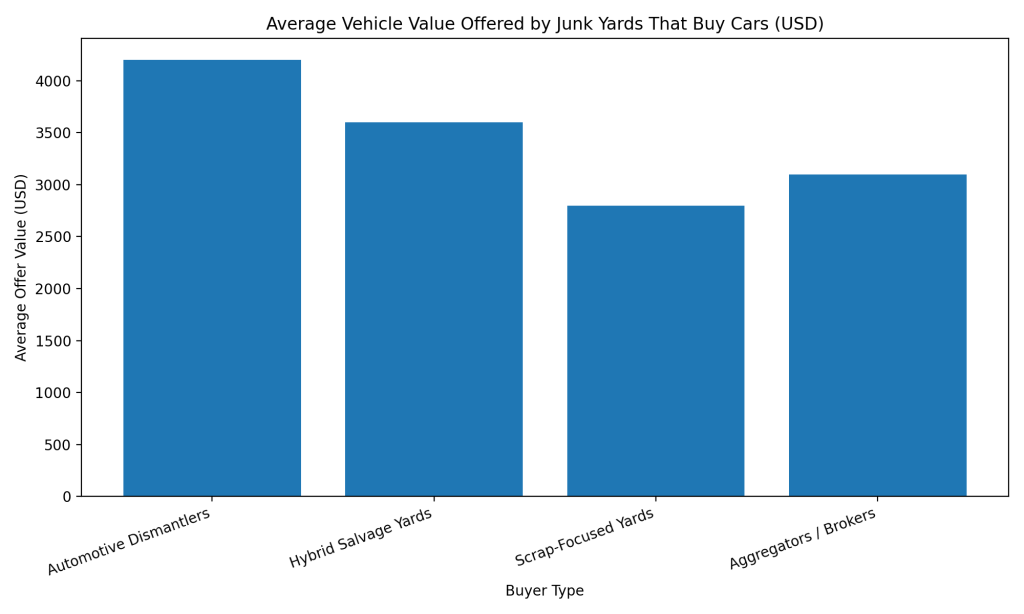
Facilities have different downstream buyers, contracts, and processing efficiencies. Two yards may evaluate the same vehicle very differently.“Free Towing Means No Cost”
Towing is never free. It is simply built into the price calculation.“The First Quote Reflects Market Value”
Without comparison, sellers have no visibility into how the broader market values their vehicle.The Importance of Buyer Comparison in the Recycling Market
Many sellers contact one local facility and stop there. This creates blind spots because:- Different yards specialize in different vehicle types
- Some prioritize parts resale while others focus on scrap
- Capacity and demand fluctuate
Step-by-Step: Working With Junk Yards That Buy Cars
Step 1: Assess Vehicle Completeness
Confirm whether major components are present:- Engine
- Transmission
- Catalytic converter
- Wheels
Step 2: Verify Ownership Documentation
A clear title simplifies and accelerates the process. Some sellers review Homepage, /faqs, and /locations to understand documentation expectations before requesting quotes.Step 3: Describe Access Accurately
Honest access details prevent towing complications.Step 4: Compare Recycling Facilities
Request multiple offers within a short timeframe to reflect current material pricing.Step 5: Confirm Payment and Pickup Terms
Most facilities pay at pickup, but this should always be confirmed.Table 1: Types of Facilities Commonly Called Junk Yards That Buy Cars
| Facility Type | Primary Focus | Best Use Case | Trade-Off |
| Scrap recycling yards | Metal recovery | End-of-life vehicles | Lower ceiling |
| Automotive dismantlers | Parts resale | Complete vehicles | Slower intake |
| Hybrid salvage yards | Mixed recovery | Broad vehicle range | Variable pricing |
| Aggregators | Resale to yards | Speed | Inconsistent offers |
Table 2: Factors That Most Influence Recycling Offers
| Factor | Impact on Value | Seller Control |
| Completeness | Very high | Disclose accurately |
| Towing access | High | Provide details |
| Weight | Medium | Vehicle type |
| Documentation | High | Resolve early |
| Local demand | Medium | Compare buyers |